Calculated payments and savings are estimates. The calculator result does not constitute an offer for a loan and will not solicit a loan offer. Savings will depend on the actual amounts and rate for which you are approved, should you choose to apply.
Written by
, Edited by
and
Last updated October 27, 2026
How to use the mortgage calculator
To use our mortgage calculator, add your details to the following fields:
1. Home price: What you're hoping to spend on a home.
2. ZIP code: The home's location.
3. Down payment: How much cash you're paying up front toward the home's price.This calculator defaults to showing a 20% down payment, but you can adjust it up or down by changing the dollar amount or the percentage. This calculator assumes you're using a conventional loan, so it will automatically add private mortgage insurance (PMI) if the down payment amount is less than 20%.
4. Loan term: The default is 30 years, but you can also choose a shorter term.
5. Interest rate: Use today's average APR, enter the rate you've been quoted or use the lowest APR NerdWallet partners are offering today.
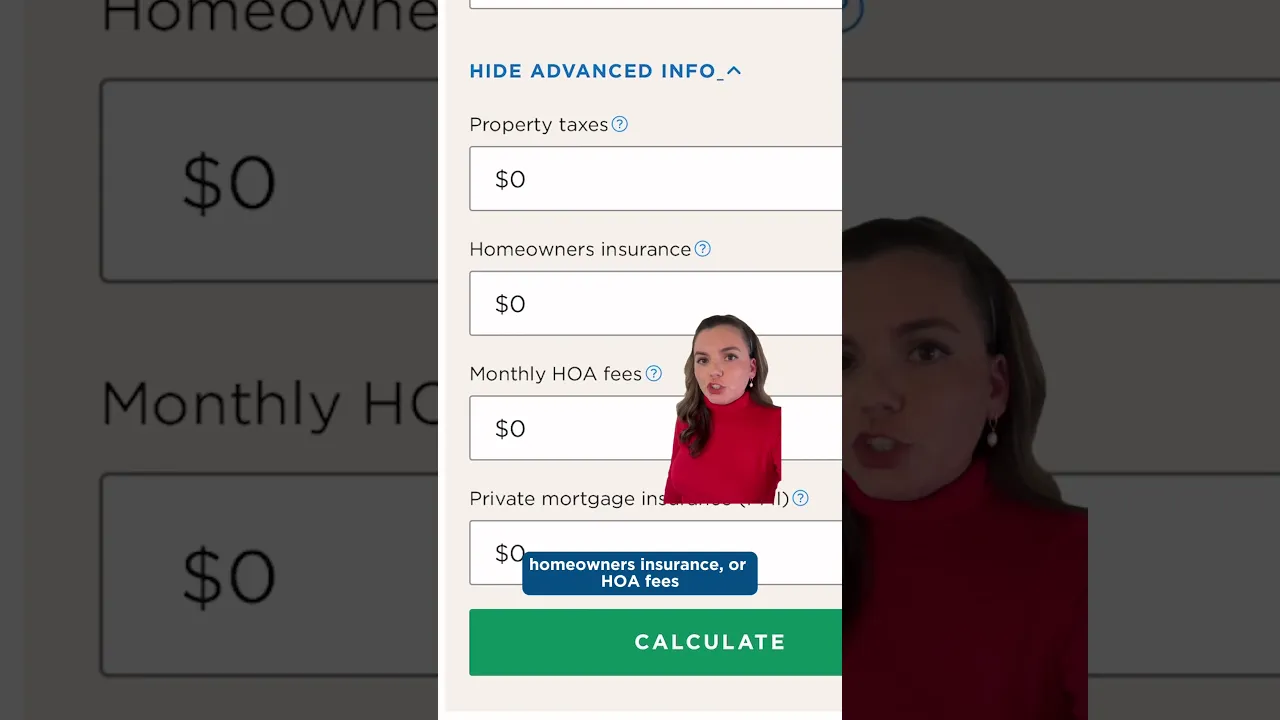
That's the least you can do. To get more accurate results, fill in the following four categories. (Estimates are fine, but this goes over how to get more specific numbers.)
6. Property taxes (per year): This is autofilled with an estimate, but property taxes vary tremendously throughout the country. Get more precise by looking up the tax rate where you're planning to buy or looking at the tax history for the home you're interested in. You can change the property tax amount by editing the dollar amount or the percentage.
7. Homeowners insurance (per year): Mortgage lenders require borrowers to have homeowners insurance. Not sure what you might pay? This calculator puts in an estimate, but you can use NerdWallet's home insurance calculator to fine-tune it. All you need to know is the property location and the rough amount you'd be looking to insure — use the home's price as a proxy.
8. HOA fees: If the home is part of a homeowners association, put the monthly dues here. (The calculator default is no HOA costs.) This is also information you can likely crib from a home's listing. One other note — if there are HOA fees but you're going to pay them directly rather than with an escrow account, you can omit them here.
9. PMI (monthly): If you've entered a down payment amount under 20%, this will autofill, since the calculator assumes you're using a conventional loan. PMI is tied to your credit score, so if you want a more accurate figure, pop over to NerdWallet's PMI calculator. If you're using a VA loan, you can zero this out, since VA loans do not require mortgage insurance. On the other hand, if you're getting an FHA loan, you'll have to pay mortgage insurance premiums regardless of your down payment amount. For more accurate payment info, use our FHA mortgage calculator.
The calculator's results will update as you adjust the numbers in these fields. The results show you the monthly payment, as well as:
Loan amount: How much you're actually borrowing in principal.
Total interest paid: How much interest you will pay over the life of the mortgage if you keep it until its term ends. (Most people sell or refinance well before that point, but it's still interesting info.)
Payoff date: If you kept the same loan for its entire term, here's the month and year when you'd own the home free and clear.
There's also a simple annual amortization schedule. Amortization shows how your mortgage payment changes over time. Even though the principal and interest payment doesn't change with a fixed-rate mortgage, the percentage of that payment that's going toward each component does. At the beginning of the loan, more goes toward interest; the closer to the end of the loan's term, the more of the payment goes toward principal. If you want a more detailed month-by-month look, yes, NerdWallet has an amortization calculator, too.
CONSIDERING A REFI? If you're looking to see how much you could save by refinancing your mortgage, try NerdWallet's refinance calculator.
This calculator is showing you what you'd pay to your mortgage lender or loan servicer each month. It's often abbreviated as PITI: Principal, interest, taxes, insurance. Your mortgage payment is definitely a big bill, but it doesn't include all the costs of owning a home. Utilities, regular home maintenance and as-needed repairs are also going to add to your homeownership costs.
If you're trying to figure out whether homeownership is the right path for you, take a look at our rent vs. buy calculator. For a more holistic look at how a mortgage payment would fit into your budget, check out NerdWallet's home affordability calculator.
When you're budgeting to buy a home, you're focused on saving enough to cover your closing costs and down payment, and mortgage rates are top of mind, too. But as much cash as that is, that's really just your start-up cost. Going forward, you're going to be paying your mortgage payment — what's covered in this calc — plus additional costs. Even with a brand new home, you'll have maintenance costs. With an older home, you might face more significant repairs. And utilities can feel especially sneaky. It costs the same to get internet in a house as it does an apartment, but it costs a lot more to heat or cool a house versus an apartment. Definitely pay attention to where going up in square footage could bump up your budget.
There are a few approaches you can take to chipping away at your mortgage payment when you're preparing to buy a home. These aren't mutually exclusive, either — use what works for you!
Compare multiple mortgage lenders
Mortgage lenders' quotes are going to vary in terms of how much you're qualified to borrow, what fees are included and what your mortgage rate will be. Shopping multiple lenders will let you see which is the best deal. Believe it or not, it isn't always the lender offering the lowest mortgage interest rate. Not sure where to start? Take a peek at NerdWallet's curated list of the best mortgage lenders.
Shop around for homeowners insurance
Same idea here: Get multiple quotes when you're looking for homeowners insurance. This goes for when you're a homeowner, too. A 2026 NerdWallet study found that just 19% of homeowners had shopped different home insurers in the past 12 months. But sticking with the same insurer year after year could be costing you. For more details, check out NerdWallet's insurance team's tips for saving on homeowners insurance.
Work on your credit
Mortgage lenders usually offer their lowest rates to borrowers with the highest credit scores. With conventional loans, a small difference in credit score can make a big difference in the rate you're offered. If you've had some setbacks you might want to work on your score before you start home shopping. Our guide to building credit fast can help you get going.
Look into different loan types
Conventional loans are by far the most common mortgages in the U.S., but they aren't the only option. If your credit isn't the best, you might be better off with an FHA loan. FHA loans have lower minimum credit score requirements, and credit score doesn't carry as much weight in determining the interest rate on an FHA loan. There are other cost considerations, since FHA loans come with mandatory FHA mortgage insurance. A loan officer or mortgage broker can help you math out your options.
Consider an ARM
Here's another way to slice and dice home loans: Fixed- versus adjustable-rate. Most mortgages are fixed-rate, so the interest rate remains the same for the life of the loan. But adjustable-rate mortgages are also an option (and yes, there are adjustable-rate FHA loans, VA ARMs, etc. — it's not limited to conventional loans).
Here's how an adjustable-rate mortgage can help you save, for a little while. ARMs kick off with an introductory fixed-rate period that's usually three to 10 years. During that time, the interest rate is generally significantly lower than prevailing rates for fixed-rate loans. The catch is that once that intro period is over, the rate starts adjusting; if interest rates have moved higher, that means the rate will begin adjusting upward.
Still, an adjustable rate mortgage can let you enjoy a few years at a discounted rate. If you're fairly confident you'll sell and move before the adjustments hit, an ARM can be a solid option. And if mortgage rates drop substantially while you're in the intro period, there's the potential that you could refinance into a fixed-rate loan.